Financial fraud is an increasingly common occurrence among citizens and companies alike. Despite years of raising awareness, education, and improving prevention systems, the last two years have led to an alarming spike in lost funds. Exactly how much money is involved, we will never know, as most victims – both private and business – will never report what happened to them. And even more attempted frauds will only be recorded in the latest protective protocols of banks, card companies, and other financial institutions.
More than half of all frauds involve artificial intelligence, either in the form of generated content, devising the scam, or analyzing vulnerabilities. Identity theft, although in decline as a type of fraud for years, has become far more sophisticated and difficult to detect since the advent of generative artificial intelligence. Experts agree on the urgency that security must finally be placed at the epicenter of every digital service, especially financial ones.
This very topic has been discussed for years on the main stage of the Money Motion conference. Its fourth and largest edition so far will be held on March 11 and 12 at the Zagreb Fair with the support of leading financial and technological brands – Mastercard, ASEE, Monri, Croatia osiguranje, A1 Hrvatska, Electrocoin, Nexi, HPB, Bankart.
Ahead of the conference, we spoke with industry opinion-makers.
Fraud has become a new service
Experts around the world warn that scams have become so numerous and organized that we are talking about a completely new layer of the market. Thus, terms like scam as a service or fraud as a service are increasingly used. It is not just a descriptive term. The past year has seen a surprising increase in black-market technological solutions that serve as automated digital platforms for conducting scams, usable by anyone, regardless of prior knowledge.
“Frauds have become industrialized, meaning that fraud is no longer a marginal risk, but a common challenge for the entire financial ecosystem. Those who still rely on static rules and post-incident controls are already lagging; today’s environment demands real-time intelligence, identity, and collaboration between banks, merchants, and networks. That’s why security has become one of the most valuable advantages in payments,” warns Bartosz Ciolkowski, Division President, South East Europe, Mastercard.
As a concrete example of prevention, he adds that Mastercard has invested more than 11 billion dollars in cybersecurity over the past five years. They use the latest technology to analyze behavioral patterns; they scan billions of data points to protect each of the 159 billion transactions annually between banks, merchants, and clients – and stop frauds in real-time, before they happen.

Although artificial intelligence has been used for fraud detection much longer than for their creation, generative AI has confronted the industry with a new level of risk – greater volume, greater diversity of attackers, and potential victims. Ultimately, also a far greater cost to the global economy.
Tens of trillions of dollars at stake
“The transformation of cybercrime, strongly fueled by artificial intelligence, has profound consequences for the financial market. According to estimates by Cybersecurity Ventures, the global cost of cybercrime in 2031 could amount to approximately 12.2 trillion dollars annually if the current growth trend continues. Organizations that have placed security as a strategic priority protect user trust and their reputation, while others are merely reacting under the pressure of increasingly sophisticated attacks. Such differences in the level of preparedness have direct consequences: user trust, the stability of the financial system, and the reputation of institutions today directly depend on their ability to manage security risks,” explains Robert Preskar, Director of the Product and Solutions Development Department in the area of Security and Card Operations at ASEE Hrvatska.
ASEE Hrvatska considers cybersecurity the foundation of every product and collaboration, and thus, over the past two years, they have seen clear progress in the sophistication of phishing attacks for which it is no longer enough just to check the spelling of the email to recognize them, as well as the use of bots on social networks for identity and password theft, especially targeting older users.

“Regardless of the current situation and regulations such as DORA, NIS2, and CRA, a large number of companies outside the IT and financial environment still ignore and do not invest in cybersecurity. In addition to the technology itself and a kind of ‘AI arms race,’ the key to combating cyber threats is the networking of people from the profession, sharing information to suppress threats with a large reach, and the cooperation of all institutions involved in the process, from the financial institution itself, service providers, the state, to specialized companies in the domain of cyber security.”
How to utilize the potential of artificial intelligence in preventing financial attacks on organizations and users will be an important topic on the AI & Automation Stage, the newest stage of the Money Motion conference. Find your ticket for the conference on the official website www.money-motion.eu or the Entrio platform. The promotional Early Bird price of 289 euros is available until Sunday, February 14.
The Latest European Union Regulation
“Security is today one of the key elements of the financial services we provide. Technological sophistication is no longer enough on its own – the value of a bank is now measured by its ability to prevent an attack before the client even notices it. In this sense, security is one of the most important services HPB offers, because without it, no financial product can be reliable or sustainable in the long term,” emphasizes Josip Majher, member of the Management Board of HPB.
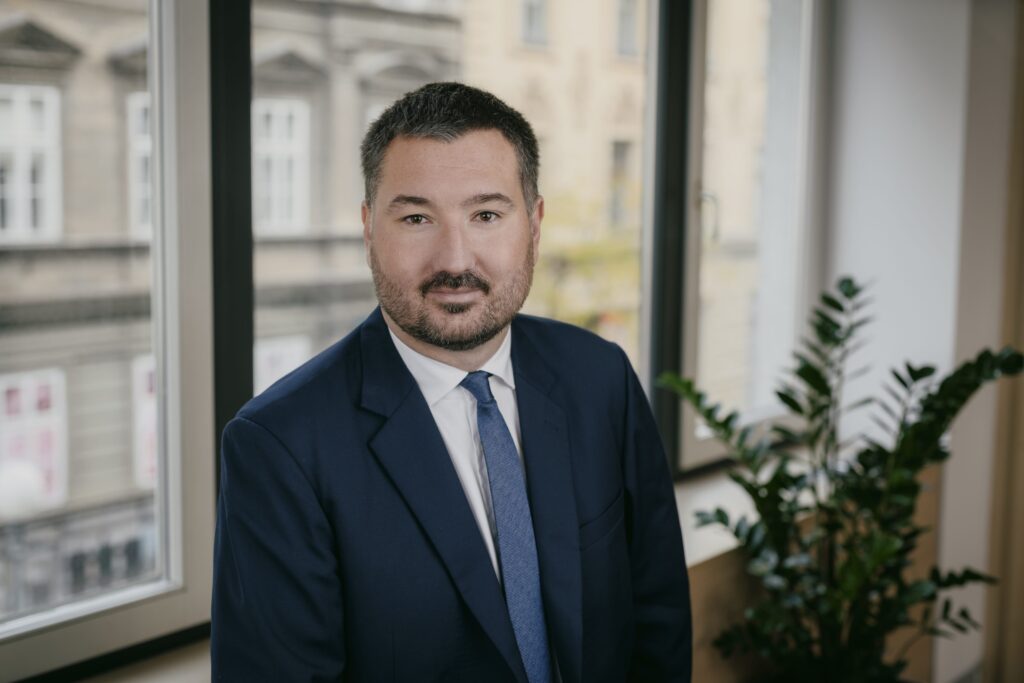
The investment of financial institutions in the defense and detection of fraud to protect their users is a crucial aspect of the European Union’s PSD3 regulation. In other words, banks today have greater responsibility for protecting citizens and business entities than ever before, and if they do not apply sufficiently high protection, they will have to bear the costs of the attacks.
“HPB has been investing for years in improving surveillance systems, anomaly detection, and multi-layered risk management – from cyber protection and fraud prevention to business continuity management. At the same time, the security of digital services is part of the daily experience of our users: from advanced authentication mechanisms to rules for data protection and financial transactions, which further strengthens confidence in online and mobile banking. Nevertheless, even the most advanced security systems cannot fully replace the conscious and responsible role of people. Attention, informedness, and responsible behavior of both clients and employees in the digital environment are still one of the key elements of security.”
That in the world of scalable and personalized fraud, security is more than just a function, but already a significant, if not crucial, prerequisite for trust in banks and the financial system, agrees Marijo Sutlović, Director of the Cyber and Information Security Department at OTP Bank.
“For many years now, banks have been applying systems that use AI and analytical models, enabling them to detect anomalies, frauds, and compromises. In this way, almost invisibly, they provide additional security to their service users and enable the reliability of digital channels and the transactional system as a whole. Simultaneously with the expansion of the spectrum of security services, the challenge for banks is to find a balance between strong protection and simple user experience, which is an imperative. Security has become one of the most significant financial services today, because without it, the trust that is the true value making the difference in a world where our assets are inextricably linked to various digital channels, disappears.”