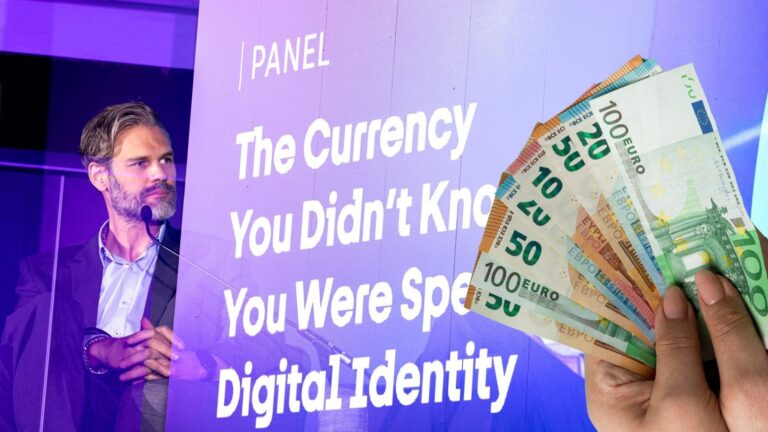
Europe has digitized payments, accelerated settlement, and placed security at the heart of the financial system. But the next step is no longer just a question of speed. The digital euro and tokenization open up a much bigger question: Who controls the infrastructure of money in the digital age, and how will value move in an economy that works 24/7?
The answers to these questions will be sought by industry leaders at the largest FinTech conference in Central and Eastern Europe. The fourth edition of Money Motion will be held on March 11 and 12 at the Zagreb Fair, with the support of leading industry brands – Mastercard, Monri, ASEE, Croatia osiguranje, A1 Hrvatska, Electrocoin, Nexi, HPB, Bankart, Smartis, and many others. Find your ticket on the official conference website or the Entrio platform.
The digital euro and asset tokenization across Europe, and beyond, is an important topic of this year’s program. Discussions about the future of financial infrastructure will be heard on the main stage, as well as the FinTech2030 stage, and ahead of the conference, we spoke with three experts and representatives of different financial market stakeholders about the most important issues.

Digital assets as a complement, not a threat
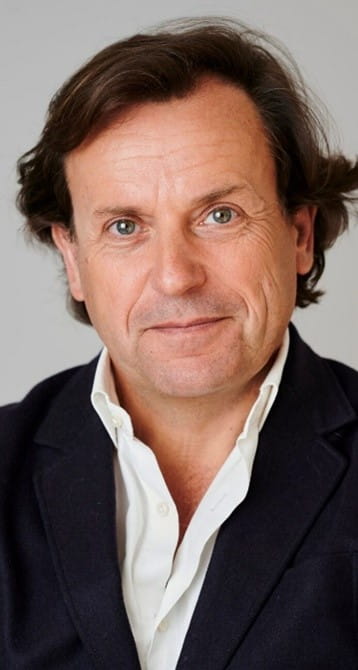
From the perspective of a global payment network, new forms of digital currencies do not mean the collapse of the existing system, but its expansion. “The technologies behind new forms of digital currencies represent a new opportunity for payments and for our network. We have been working with partners in this space for years, and there is already a range of Mastercard programs on the market that enable users to buy and use digital assets,” says Hendrik Bourgeois, Senior Vice President Public Policy and Government Affairs, Mastercard Europe.
He points out that Mastercard sees the development of digital currencies as a natural evolution of the ecosystem. Digital assets, he adds, are not competition, but an additional layer. “We see digital assets as a complement to the payment ecosystem and as another currency that we support within our network. Ultimately, it’s about enabling people to pay in the way that suits them best – by expanding the payment ecosystem through interoperability, relevant services, global reach, and trust.”
This formulation also contains the key European dilemma: how to maintain interoperability and trust while simultaneously developing its own public money infrastructure.
Europe is late, but cannot stay on the sidelines
Figures from 2025 show the stake involved. Nikola Škorić, co-founder of Electrocoin and Money Motion, warns that the private sector already has serious momentum.
“Europe is quite late compared to the leading private stablecoin issuers, as the American stablecoins USDC and USDT together processed more than $30 trillion worth of transactions in 2025, which is enormous global traffic that far exceeds most nominal European initiatives.”
In this context, the digital euro becomes more than a technological project.
“If we look at the cold facts, Europe is moving towards a world where money becomes a digital infrastructure, not a product. The digital euro should bring a state guarantee and stability to the online environment, while the tokenization of real assets will show how quickly and efficiently value can move when recorded on the blockchain.

This won’t ‘kill’ crypto. Rather, it will separate speculation from real use and force projects to show what they are really for. When institutions adopt the same technology, the network effect becomes huge, and what was alternative yesterday becomes standard tomorrow.”
His assessment for the end of the decade is pragmatic: “By 2030, citizens will probably pay and send money with a combination of the digital euro and regulated stablecoins. Bitcoin and similar assets will remain important, but more as a global, neutral store of value than as a means for ‘coffee in the neighborhood.’ The real change is that the blockchain will become invisible. We will use it without thinking about it. And when technology becomes boring, that is usually a sign that it has won.”
Tokenization as a redesign of the financial “waterway”
If the digital euro represents the public layer of money, tokenization represents a new way for assets to move. Robert Markuš, director of Smartis, emphasizes that this is a deeper transformation.
“If the digital euro becomes the new public settlement infrastructure, and tokenized assets enter the main financial flows, then we are not just digitizing assets, but redesigning the ‘waterway’ of the financial market.”
According to his interpretation, three infrastructure layers will decide whether the tokenized economy can develop safely and operationally stable: an interoperable real-time settlement infrastructure, an identity-driven compliance and trust architecture, and cryptographic security and operational resilience built into the design.

Banks will not be able to choose between the old and the new, he warns, but will have to build hybrid architectures in which tokenized deposits, central bank digital currency, DLT platforms, RTGS systems, SEPA, and card schemes coexist.
Markuš further emphasizes that in the tokenized economy, identity becomes just as important as liquidity. Strong digital identity, orchestration of KYC/KYB processes, AML supervision adapted to tokenized flows, and programmable compliance are no longer an additional functionality, but the foundation of the system.
The discussion moves to the stage
This topic will not remain at the theoretical level. On the main stage of Money Motion, the panel “Digitalised Euro: Stablecoin, Tokenised Deposit or CBDC?” will be held, with the participation of Alexandre Soroko (Visa), Martin Bruncko (Schuman Financial), Jürgen Schaaf (ECB), and Ronald Oliveira (Hard Yaka Ventures).
Jürgen Schaaf will also give the keynote “From Vision to Value: The Digital Euro and Europe’s Road towards Wholesale CBDC,” while Faustine Fleuret will open the geopolitical dimension of tokenization in the keynote “From tokenising to decentralising finance: EU policymakers vs. US strategy makers.”
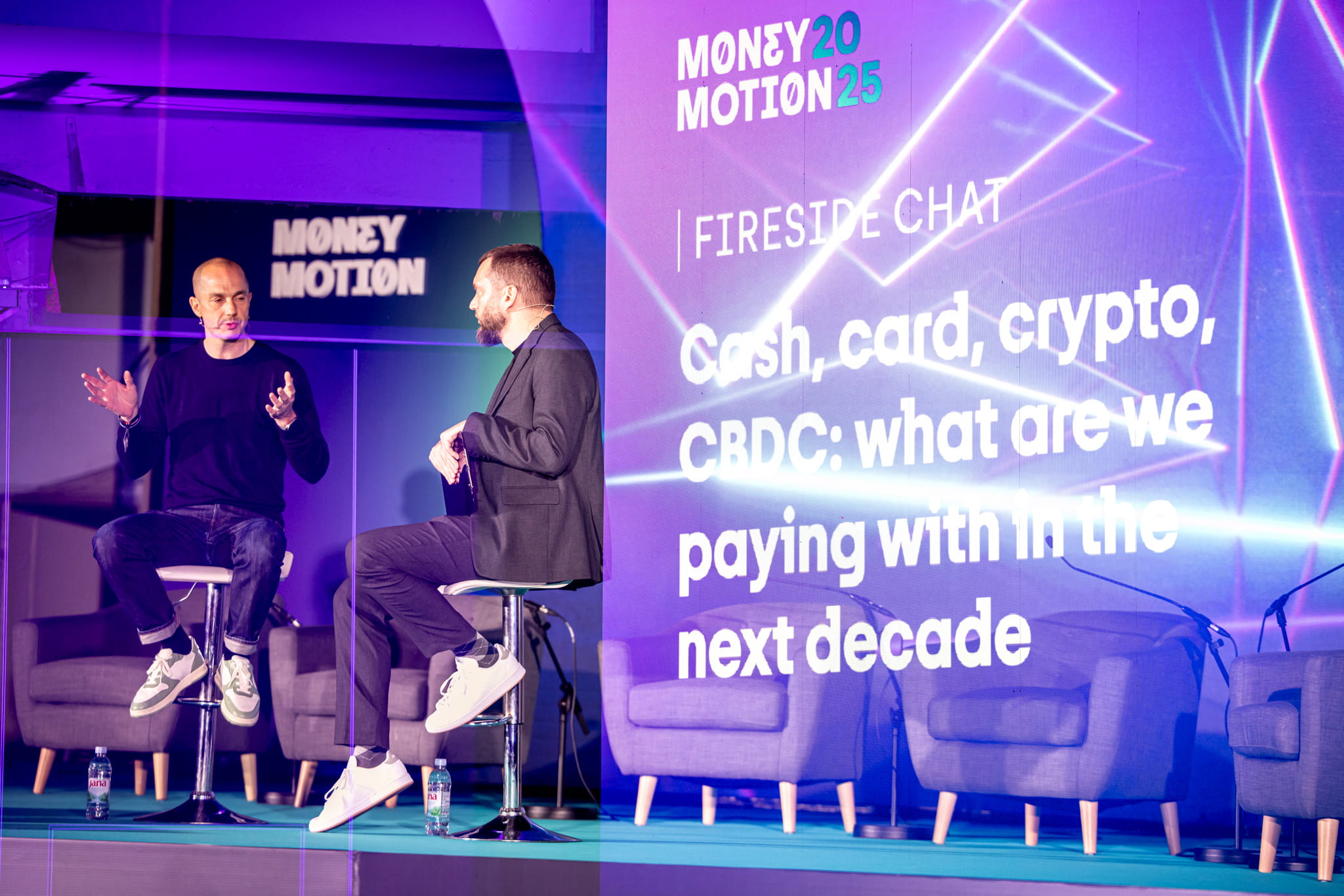
In addition to the main discussions, the Expo Stage sponsored by Raiffeisen Bank International brings a special format. On Wednesday, the first day of the conference, Damjan Rudež and Alojzije Janković will hold a fireside chat, and Janković will then play a game of ‘blind chess’, a symbolic demonstration of strategic thinking in an environment where the pieces are increasingly moving beneath the surface, in which the audience will play an important role.
Because that is exactly what is happening with money. The digital euro, tokenization, and interoperability might soon become boring infrastructure. And in finance, that is usually a sign that the system has become the standard.